Imagine going to work knowing you could walk into a murder scene, a home where someone has taken their own life or a property where children have been living in horrific conditions. Ultimately, this is the reality of Trauma Scene Cleaning and what makes the work of a specialist trauma cleaner so different from everyday cleaning.
For most people, these are situations they will never experience. However, for our trauma cleaners at Trauma Clean 24 Seven, these are real-life scenarios they have witnessed while doing their jobs.
Over the years, our teams have attended murder and suicide scenes, entered properties where someone has died alone and cleared pathways through severely hoarded homes so authorities could reach a deceased person that has been there for some time.
Furthermore, they have witnessed appalling conditions where children have been living amongst rubbish, human waste and vermin. They have also supported grieving families and worked alongside relatives desperately trying to help loved ones suffering from severe hoarding disorders.
These are not hypothetical situations. These are real experiences our operatives have faced.
Trauma Cleaning Is Not an Ordinary Cleaning Job
When cleaning means confronting tragedy
Most cleaning professionals maintain buildings, improve hygiene and help keep environments safe and presentable. In contrast, trauma cleaners often enter properties after something terrible has happened.
Our operatives encounter blood, bodily fluids, decomposition contamination and hazardous living conditions. As a result, they must identify risks, carry out specialist cleaning and manage contaminated materials safely.
However, the physical cleaning only tells part of the story.
Imagine cleaning a room where someone has died violently. Alternatively, imagine entering a home where someone lay undiscovered for weeks.
Now imagine carrying out that work professionally while knowing that a family has lost someone they love.
That requires far more than cleaning skills. It requires compassion, emotional resilience and an understanding of human suffering.
The Real-Life Scenes Our Trauma Cleaners Have Witnessed
Clearing a pathway to reach someone who had died
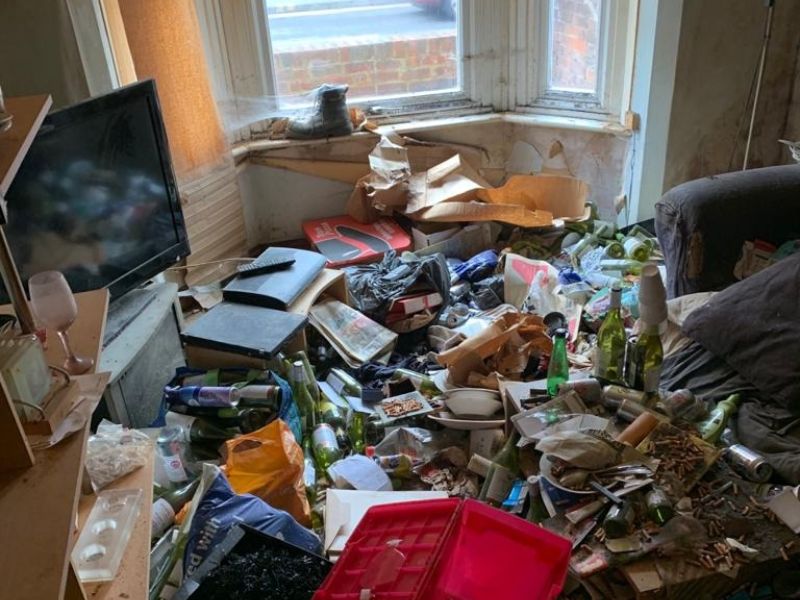
One particularly distressing job involved a severely hoarded property where someone had died inside.
The sheer volume of accumulated belongings blocked access through the home. Consequently, our team had to clear a pathway so the relevant authorities could reach the deceased person.
Think about that for a moment.
Someone had been living in a home so overwhelmed by possessions and rubbish that even reaching them had become incredibly difficult.
Of course, we do not know every circumstance that leads someone to live this way. Nevertheless, severe hoarding can involve complex mental health difficulties, isolation and years of personal struggles.
For this reason, our Hoarding Clean Up Services require us to recognise those difficulties and approach each situation without judgement.
Children living amongst rubbish, faeces and vermin
Perhaps some of the most upsetting environments our teams have entered are properties where children have been living in horrific conditions.
For example, we have witnessed homes where children had nowhere suitable to sleep because rubbish covered their mattresses.
We have also entered properties where faeces contaminated areas throughout the home, mice and insect infestations had taken hold and rubbish overwhelmed the living spaces.
Imagine walking into a child’s bedroom and discovering that there is no clean space for them to lie down and sleep.
Understandably, for our operatives, particularly those with children of their own, these situations can be incredibly difficult to witness.
Where do these children sleep? Where do they eat? How long have they been living this way?
And perhaps the most heartbreaking question of all: is this the only home environment they have ever known?
These are real properties our cleaners have attended. They are not scenes from television programmes or examples invented to shock people.
Despite the distressing conditions, our teams must remain professional, manage the contamination and recognise when serious concerns require the involvement of safeguarding professionals.
At the same time, they cannot simply ignore the human reality of what they have witnessed.
Working with Families During Their Most Difficult Moments
Supporting relatives following a traumatic death
Our operatives do not just encounter difficult environments. They also meet people experiencing unimaginable grief.
Following murders, suicides and unattended deaths, family members often face decisions they never expected to make.
For instance, they may need to enter the property where their loved one died, identify belongings they want to keep or arrange trauma scene cleaning before they can return.
Some relatives want to talk, while others struggle to find the words.
Therefore, our team must understand when to listen, when to offer reassurance and when to give families the space they need.
Through our After Death Cleaning Services, we handle the specialist trauma scene cleaning so grieving families do not have to face hazardous contamination themselves.
More importantly, we recognise that every property contains memories and every situation involves people whose lives have changed.
Helping families affected by severe hoarding
Alongside our work following traumatic deaths, we have also supported families trying desperately to help relatives living with severe hoarding difficulties.
In many cases, these families have spent years worrying about their loved one’s health and safety. As conditions deteriorate, they may feel frightened, frustrated or completely helpless.
However, simply removing the rubbish does not necessarily resolve the underlying problem.
Instead, our teams must approach these situations with patience, communicate sensitively and recognise the emotional difficulties that both residents and family members may face.
Above all, our job is to help create a safer environment without stripping people of their dignity.
Our Trauma Cleaners Are Human Too
Imagine witnessing these scenes as part of your job
People often focus on the extreme conditions trauma cleaners encounter. However, they rarely consider the emotional impact on the operatives themselves.
Our cleaners are trained professionals. They know how to manage contamination, use specialist equipment and follow strict safety procedures.
Nevertheless, they are also parents, partners, sons, daughters and friends.
They have emotions. They have families. They understand grief and worry, just like everyone else.
How would you feel after cleaning the aftermath of a violent death?
How would you feel after witnessing children living amongst human waste, rubbish and infestations of mice?
What would go through your mind after helping authorities gain access to someone who had died inside a severely hoarded property?
And, perhaps most importantly, how would you feel going home to your own family afterwards?
Despite these challenges, our operatives must manage their emotions while remaining focused on the work in front of them.
They cannot allow distress to compromise their safety or the quality of the cleaning. Equally, they must never lose their compassion for the people involved.
This combination of technical expertise and emotional resilience sets specialist trauma cleaners apart from everyday cleaning professionals.
While our Bio Hazard Clean Up services demand professional training, the human side of trauma cleaning demands something just as important: empathy.
Behind Every Scene Is a Human Story
More than blood, rubbish and contamination
Television programmes and social media often portray trauma cleaning as a shocking occupation.
Typically, they focus on the blood, the decomposition, the rubbish and the extreme living conditions.
However, those images rarely tell the whole story.
Behind the contamination is someone who lost their life.
Behind the hoarding is someone who may have struggled for years.
Behind the unsafe living conditions are children who deserve a clean, safe place to call home.
And behind the cleaning request is often a family facing one of the most difficult moments of their lives.
Our teams have witnessed all of these realities first-hand.
Of course, we cannot undo a tragedy, bring someone back or resolve years of personal difficulties in a single visit.
Nevertheless, we can help families take the next step. We can restore safer conditions, remove hazardous contamination and, above all, treat the people involved with dignity.
Trauma cleaning is not simply about having the stomach to deal with situations others cannot face. It is about having the compassion to remember that every scene involves real people and real lives.
So, the next time you hear someone say they are a trauma cleaner, consider what that job actually involves.
Think about the scenes they may have witnessed, the families they have supported and the conditions they have had to confront.
Then ask yourself one question.
If you had to do this for a living, how would it make you feel?
Professional Trauma Scene Cleaning with Compassion
Trauma Clean 24 Seven provides specialist trauma scene cleaning, death clean up, after death cleaning services, biohazard cleaning and hoarding clean up services.
We support families, local authorities, housing associations, social care professionals and property managers across Essex, Suffolk, Cambridgeshire, Hertfordshire, Bedfordshire and London.
Furthermore, our experienced operatives understand both the practical and emotional challenges of this work. For that reason, we approach every situation with professionalism, discretion and compassion.
Visit: www.traumaclean24seven.co.uk
Call: 0203 640 8247