
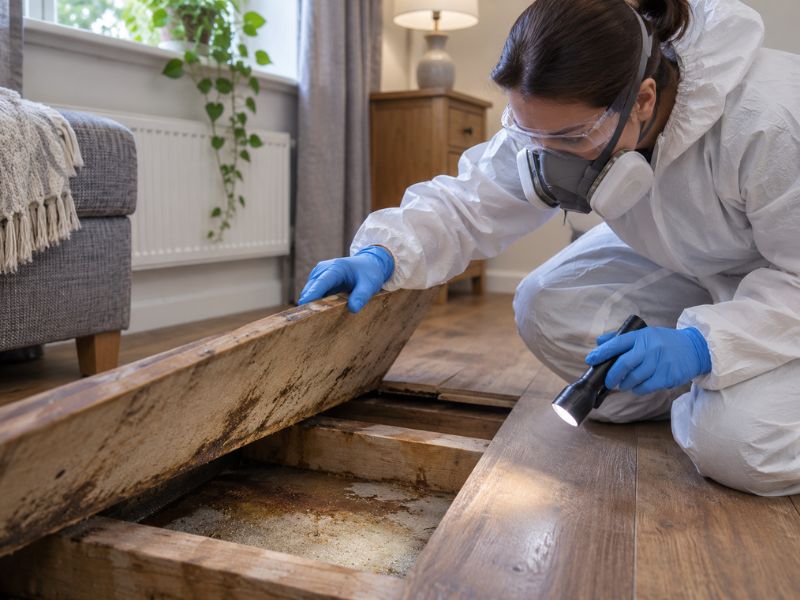
A floor can appear completely clean while potentially hazardous contamination remains hidden beneath it. When blood, decomposition fluids or other bodily fluids penetrate flooring, the problem can extend far beyond what is visible on the surface. In homes, commercial properties and care environments, bodily fluids can seep through carpets, underlay, laminate joints and gaps between floorboards, reaching areas that ordinary cleaning methods cannot access. Professional bodily fluid clean up is particularly important when contamination has penetrated porous materials, as surface cleaning alone may not adequately address the affected areas.
At Trauma Clean 24 Seven, our specialist Bodily Fluid Clean Up services address visible contamination and investigate the hidden risks that may remain beneath flooring.
Quick answer: What happens when bodily fluids soak into floorboards?
When bodily fluids reach floorboards, they can penetrate porous timber, collect between boards or travel into the subfloor below. Depending on the type and volume of fluid, this may result in biological contamination, persistent odours and damage to affected materials.
Cleaning the visible surface does not necessarily remove contamination that has penetrated beneath it. In some circumstances, professional bodily fluid clean up may involve specialist decontamination, lifting flooring and removing materials that cannot be effectively cleaned.
How do bodily fluids get beneath flooring?
Flooring is not always an effective barrier against liquids, particularly when fluids remain in contact with the surface for an extended period.
Bodily fluids can travel through several routes:
Carpets and underlay: Absorbent materials can allow fluids to pass through to the floorboards beneath.
Laminate flooring: Liquids can penetrate joints, edges and damaged seals.
Wooden floorboards: Gaps between boards and the natural porosity of untreated timber can allow contamination to penetrate.
Skirting boards and floor edges: Liquids can travel towards walls and collect in concealed areas.
Subfloor voids: Where sufficient fluid penetrates the flooring, contamination may reach joists, insulation or other materials beneath.
The extent of contamination depends on the flooring construction, the volume of fluid and how long it has remained untreated.
This is why a professional bodily fluid clean up assessment should consider more than the original location of the spill.
Why hidden bodily fluid contamination is a serious concern
1 Biological contamination can remain beneath the surface
Blood and certain other bodily fluids may contain bacteria, viruses and other potentially harmful microorganisms.
The Health and Safety Executive (HSE) provides guidance on the precautions and decontamination procedures required when dealing with blood and potentially infectious bodily fluids.
Where fluids have penetrated timber or other porous materials, surface disinfection alone may not reach every affected area.
Professional bodily fluid clean up involves assessing the potential extent of contamination rather than simply treating visible staining.
2 Persistent odours can develop
One indication of concealed contamination is an unpleasant odour that remains after a room has been cleaned.
When bodily fluids enter porous materials or become trapped beneath flooring, they may produce persistent smells as biological material breaks down.
These odours can sometimes travel through gaps in flooring, skirting boards and adjoining spaces.
Air fresheners and surface deodorising products may temporarily mask the smell, but they do not remove the underlying source.
Effective bodily fluid clean up involves locating and addressing the contamination responsible for the odour, rather than relying solely on deodorising treatments.
3 Timber and flooring materials can become contaminated
Wood is naturally porous, particularly where it is untreated, damaged or exposed along cut edges.
Once bodily fluids penetrate the timber, cleaning becomes more complicated.
Depending on the depth and severity of contamination, affected floorboards may require specialist treatment or removal.
Not every incident requires flooring replacement. However, retaining heavily contaminated materials that cannot be adequately decontaminated may allow problems to persist.
4 Contamination may extend beyond the original area
Bodily fluids do not necessarily remain where they first make contact with the floor.
Depending on the volume, flooring construction and direction of flow, liquids may spread underneath surrounding materials.
This means that a relatively small visible stain does not always accurately represent the full extent of contamination.
A specialist bodily fluid clean up service can assess whether the incident has affected adjoining floorboards, wall edges or concealed subfloor areas.
Why unattended deaths can create particularly complex flooring contamination
One situation where bodily fluids may penetrate flooring is following an unattended or undiscovered death.
When someone passes away and remains undiscovered for a period of time, decomposition can lead to the release of biological fluids.
Depending on the circumstances, these fluids may penetrate mattresses, bedding, carpets, underlay and eventually the floorboards beneath.
By the time the property is accessed, visible contamination may represent only part of the affected area.
The situation can become more complex when decomposition fluids have reached timber, floor joints or the subfloor.
Professional bodily fluid clean up following an unattended death may therefore require the removal of contaminated flooring materials alongside specialist cleaning and odour remediation.
Our Unattended Death Cleanup services focus on identifying and addressing biological contamination while treating the property and everyone affected with sensitivity and discretion.
What should you do if bodily fluids have reached the floorboards?
If substantial biological contamination is suspected beneath flooring, the priority is to prevent further exposure and arrange a suitable assessment.
1 Restrict access to the affected area
Keep occupants, visitors and other contractors away from the contaminated flooring until the risks have been assessed.
2 Avoid lifting contaminated materials yourself
Removing carpets, underlay or floorboards without appropriate training and protective equipment may expose individuals to biological hazards and spread contamination.
3 Do not attempt to cover or conceal the affected area
Painting, sealing or installing new flooring over untreated contamination does not provide an appropriate solution.
4 Avoid excessive cleaning liquids
Pouring additional cleaning chemicals or water onto affected flooring may spread contamination into surrounding materials. Some disinfectants are also unsuitable for certain surfaces or types of bodily fluid.
5 Arrange professional bodily fluid clean up
Specialist cleaning operatives can assess the contamination, establish which materials require treatment and identify whether any flooring needs to be removed.
How Trauma Clean 24 Seven carries out professional bodily fluid clean up
Every incident requires an individual assessment. The appropriate cleaning process depends on the type of bodily fluid, the flooring materials and the extent of contamination.
Initial inspection and risk assessment
Our trained operatives assess the affected area, identify potential hazards and determine whether contamination may have penetrated beneath the visible flooring.
Accessing affected materials
Where necessary and appropriate, contaminated carpets, underlay or other flooring materials may need to be lifted or removed to expose the affected areas beneath.
We identify the extent of the work required and discuss any necessary removal or remedial recommendations with the client.
Specialist cleaning and decontamination
Our operatives use appropriate cleaning agents, disinfectants and specialist procedures to address contamination on materials that can be effectively treated.
Where materials cannot be adequately decontaminated, removal and controlled disposal may be necessary.
Odour remediation
When odours are present, we work to identify and remove their source.
Specialist deodorisation may form part of the bodily fluid clean up process, but it does not replace the removal of contaminated biological material.
Final inspection and recommendations
Following cleaning, we inspect the treated areas and provide recommendations for any further remedial work or reinstatement that may be required.
Our aim is to ensure contamination is properly addressed before the affected space returns to use.
Can contaminated floorboards always be saved?
Not necessarily.
The possibility of retaining floorboards depends on several factors, including the type of timber, whether it is sealed, the amount of fluid absorbed and the length of time contamination has been present.
Some affected materials may respond to appropriate professional treatment. Others may require removal because adequate decontamination cannot be achieved.
The decision should be based on the actual condition of the flooring, not simply whether the surface looks clean.
A professional bodily fluid clean up assessment can help determine the most appropriate course of action and avoid unnecessary removal of materials that can be effectively treated.
Common questions about bodily fluid clean up and floorboards
Can bodily fluids soak through wooden floorboards?
Yes. Fluids can penetrate gaps between boards and absorb into porous or untreated timber. They may also reach underlying structural materials, depending on the volume and construction of the floor.
Will the smell disappear once the surface has been cleaned?
Not always. If biological material remains trapped beneath the flooring, odours may continue until the source has been properly addressed.
Does disinfectant remove contamination beneath the flooring?
Surface disinfectants cannot be assumed to reach every concealed or absorbed deposit. Effective decontamination depends on using appropriate products and methods that reach the affected surfaces.
Do floorboards need replacing after an unattended death?
Not in every case. Replacement depends on the extent of contamination and whether the existing materials can be safely and effectively decontaminated.
Can bodily fluids affect neighbouring rooms?
Potentially. Fluids may spread beneath adjoining flooring, and odours can travel through gaps or connected voids. However, an odour in another room does not automatically mean that room is biologically contaminated.
When should I arrange professional bodily fluid clean up?
Professional assistance is advisable when there is substantial contamination, a potential infectious risk, persistent odours or evidence that fluids have penetrated carpets, underlay, timber or concealed flooring areas.
Professional Bodily Fluid Clean Up – Addressing What You Cannot See
When bodily fluids reach the floorboards, removing the visible stain is only part of the concern.
Hidden contamination can remain within porous timber, beneath flooring and in areas that routine cleaning cannot adequately reach.
At Trauma Clean 24 Seven, we understand the importance of investigating these concealed risks and taking appropriate action to address affected materials.
Our specialist operatives provide professional, discreet and compassionate bodily fluid clean up services for domestic properties, commercial premises, landlords, housing providers and facilities managers.
Whether contamination results from an accident, medical emergency, trauma incident or unattended death, our team can advise on the appropriate next steps.
Need professional bodily fluid clean up?
Visit our Bodily Fluid Clean Up service page to learn more about our specialist cleaning services.